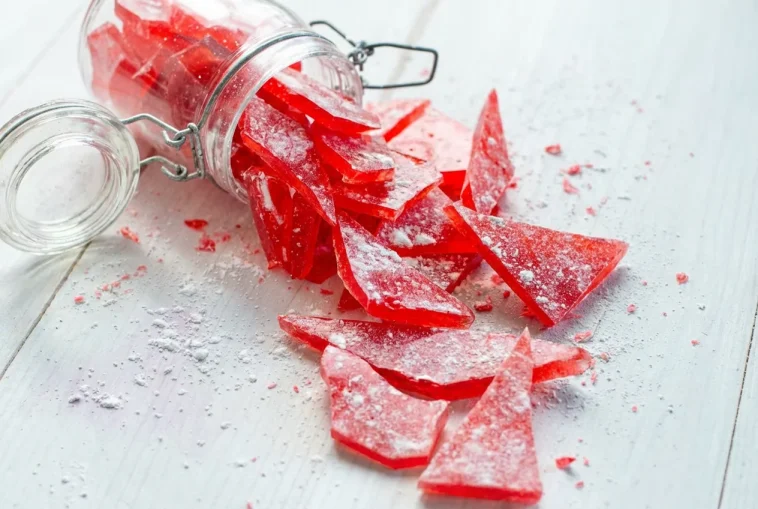
I first made cinnamon rock candy when I wanted a nostalgic, homemade sweet to tuck into holiday treat bags. The crunch, the warm cinnamon aroma and the glassy, jewel-like shards make this candy as pretty as it is simple. Unlike slow-cooked caramels, this is a quick sugar-candy project that delivers a bold cinnamon hit with minimal ingredients — great for gifts, party favors, or a fun weekend kitchen experiment.
Why you’ll love this dish
This recipe is perfect when you want an impressive-looking candy without complicated steps. It uses pantry staples and comes together in under an hour (most of that is hands-off cooling). Kids love the crystalline texture, and adults appreciate the classic cinnamon flavor that isn’t diluted by other ingredients.
“The cinnamon smell filled the kitchen and the candy snapped perfectly — I packaged it in cellophane for neighbors.” — a happy home cook
Reasons to try it now:
- Fast and budget-friendly: only five core ingredients.
- Customizable: add food coloring for festive batches.
- Great for gifts: breaks into beautiful shards that look handmade.
- Kid-friendly activity (with adult supervision during the boiling stage).
The cooking process explained
Before you start, here’s a quick overview so you know what to expect:
- Combine sugar, water, and cream of tartar in a saucepan.
- Dissolve the sugar, then bring the syrup to a rolling boil without stirring.
- Heat to the hard crack temperature (300°F / 150°C) and remove from heat.
- Stir in cinnamon extract and optional coloring, then pour onto a greased surface to cool.
- Let the candy harden completely and break into pieces.
This gives you an idea of timing (about 10–20 minutes active, cooling 20–40 minutes) and the critical moment: reaching the hard crack stage for that brittle snap.
What you’ll need
- 2 cups granulated sugar
- 1 cup water
- 1/4 teaspoon cream of tartar (helps prevent crystallization; can use a pinch of lemon juice if you don’t have it)
- 1 teaspoon cinnamon extract (or 1–2 teaspoons ground cinnamon dissolved in a little hot water, though extract gives a clearer texture)
- Food coloring (optional — a drop or two)
Notes on substitutions:
- If you use ground cinnamon instead of extract, the candy may be slightly cloudy and grainier. For the clearest result, use cinnamon extract or cinnamon oil labeled safe for food.
- Avoid stirring once the syrup reaches a boil; stirring can cause sugar crystals to form.
Step-by-step instructions
- Grease a baking sheet or line it with parchment and lightly oil the surface. Set a candy thermometer within reach.
- In a medium saucepan, combine 2 cups sugar, 1 cup water, and 1/4 teaspoon cream of tartar.
- Place over medium heat and stir gently until the sugar fully dissolves and the mixture is clear.
- Increase heat and bring to a boil. Do not stir from this point; swirl the pan gently if needed.
- Boil until the syrup reaches the hard crack stage — 300°F (150°C) on a candy thermometer. This can take several minutes; watch closely to avoid burning.
- Remove the pan from heat immediately. Wait 20–30 seconds for large bubbles to settle, then add 1 teaspoon cinnamon extract and food coloring if using. Stir quickly and carefully to combine.
- Pour the hot syrup onto the prepared baking sheet in an even layer. Work quickly — the syrup sets fast.
- Allow the candy to cool completely at room temperature, about 20–40 minutes. Once firm, break into shards using a knife or by tapping the back of the tray with a spatula.
Best ways to enjoy it
- Wrap shards in cellophane or small tins for party favors or homemade gifts.
- Use pieces as a garnish for cinnamon-spiced cocktails or mulled cider (drop a shard in hot drinks; it will slowly dissolve and add sweetness).
- Crush the candy and sprinkle over plain vanilla ice cream or baked apples for an extra crunch.
- Package a few pieces with a hot chocolate mix for winter gifts.
How to store & freeze
- Store in an airtight container at room temperature, away from moisture and direct sunlight.
- Use silica gel packets in the container if you live in a humid climate — humidity will make the candy sticky.
- Do not refrigerate; cold can introduce condensation leading to stickiness.
- Freezing is possible but not necessary. If you freeze, wrap tightly to prevent moisture. Thaw at room temperature before opening.
Food safety note: This candy is essentially sugar and water with flavoring; it’s shelf-stable if kept dry and sealed. Keep out of reach of young children when hot or during the cooking process.
Pro chef tips
- Use a reliable candy thermometer. Hitting the hard crack stage (300°F / 150°C) precisely is essential for crisp, non-chewy rock candy.
- Avoid stirring during the boil — that’s the most common cause of crystallization. If crystals form on the sides of the pan, brush them down with a wet pastry brush before continuing to boil.
- Work on a clean, dry surface and dry utensils thoroughly; water droplets can cause sudden crystallization.
- If you want perfect, clear pieces, strain any powdered flavoring or use liquid extracts.
- For even cooling and thinner shards, tilt the baking sheet to spread the syrup out slightly right after pouring.
Creative twists
- Spiced blend: add a pinch of ground clove or allspice for a warm, mulled spice profile.
- Cinnamon sugar shards: dust broken pieces lightly with extra cinnamon sugar before they fully cool for a frosted look.
- Peppermint-cinnamon swirl: divide syrup and color half red; pour alternating lines and drag a toothpick through for a swirl effect.
- Sugar-free/low-sugar: true rock candy relies on sugar crystallization, so there’s no direct low-sugar swap that yields the same texture. Consider using flavored sugar crystals or alternative confections instead.
- Candy lollipops: pour into molds on sticks to make cinnamon lollies.
Your questions answered
Q: Do I have to use a candy thermometer?
A: It’s strongly recommended. The difference between soft crack and hard crack stages is small but crucial for proper texture. A thermometer removes guesswork.
Q: Why did my candy turn cloudy or grainy?
A: Cloudiness usually comes from using powdered flavoring or ground spices; graininess often results from premature crystallization caused by stirring or sugar crystals on the pan sides. Use liquid extracts and avoid stirring during the boil.
Q: Is cinnamon extract safe for kids?
A: Yes, food-grade cinnamon extract is safe to consume. However, the cooking process reaches very high temperatures — keep children away from the stove while boiling and pouring.
Q: How long does homemade rock candy last?
A: Stored airtight in a dry place, it should keep for several weeks to months. Humidity and temperature changes will affect texture, so proper storage is key.
Q: Can I mold this into shapes?
A: Yes — pour the hot syrup into heat-safe molds or onto silicone mats. Use caution: the syrup is extremely hot and sets quickly.
Conclusion
If you want more inspiration, techniques, and variations for making cinnamon rock candy at home, check these trusted resources: Cinnamon Rock Candy | Serena Bakes Simply From Scratch, Cinnamon Hard Candy Recipe – No. 2 Pencil, and Old Fashioned Cinnamon Rock Candy.